Skip to content
A Manufacturer’s Guide to Wire Harness Welding Maintenance
In high-precision automotive wire harness manufacturing, consistency is everything. Whether processing small 0.5mm² signals or heavy-duty 40mm²+ power cables, your ultrasonic welding system must deliver uniform energy day in and day out. However, many tier-1 automotive suppliers and cable assembly plants frequently encounter a critical operational bottleneck: ultrasonic transducer overheating.
As a direct manufacturer of industrial ultrasonic metal welding machinery, we understand that a hot transducer is not just a minor annoyance—it is a leading cause of frequency drift, unstable horn output, and costly production downtime. In this technical guide, we will break down the root causes of transducer heating and provide a professional framework for daily maintenance and troubleshooting.
1. Why the Transducer is Critical to Wire Harness Quality
The ultrasonic transducer is the “heart” of the welding system. It utilizes piezoelectric ceramics to convert electrical energy from the generator into high-frequency mechanical vibrations (typically at 20kHz, 35kHz, or 40kHz).
When working with automotive wire harnesses—such as EV battery busbar connectors or high-voltage charging ports—the welding process requires precise amplitude control. If the transducer overheats, its internal piezoelectric crystals experience thermal expansion, changing their resonant frequency. This results in:
- “False Welds” : Insufficient energy delivery leads to weak joint strength and high electrical resistance.
- Over-welding or Sticking : Uncontrolled energy spikes can damage the tooling or weld the wire to the anvil.
- Component Damage: Prolonged overheating permanently degrades the ceramic rings, requiring an expensive complete transducer replacement.
2. Root Causes of Transducer Overheating (Troubleshooting Checklist)
When a transducer runs abnormally hot during production, our engineering team recommends systematic troubleshooting across four main vectors:
| Check Component | Potential Issue | Impact on System |
| Mechanical Interfaces | Loose connection or oxidation between transducer, booster, and horn. | Acoustic impedance increases, transforming vibration energy into friction heat. |
| Pneumatic/Cooling Air | Insufficient cooling airflow, clogged filters, or unstable pneumatic supply. | Continuous heat dissipation fails, causing rapid thermal buildup during high-duty cycles. |
| Frequency Matching | Generator frequency drifts out of the transducer’s optimal bandwidth. | High reactive power generation increases internal electrical loss and heating. |
| Tooling Wear | Worn welding tip (焊头) or incorrect anvil positioning. | Requires higher power/longer weld times to reach energy targets, overloading the stack. |
3. Daily Maintenance Protocol for Peak Performance
To maximize the lifespan of your equipment and prevent unplanned downtime, integrate these simple protocols into your shift maintenance schedules:
Step 1: Inspect the Cooling Air Line
Ensure that the clean, dry cooling air is consistently directed at the transducer casing. Check for air pressure drops and clean the intake filters weekly to maintain maximum airflow efficiency.
Step 2: Clean and Torque the Acoustic Stack
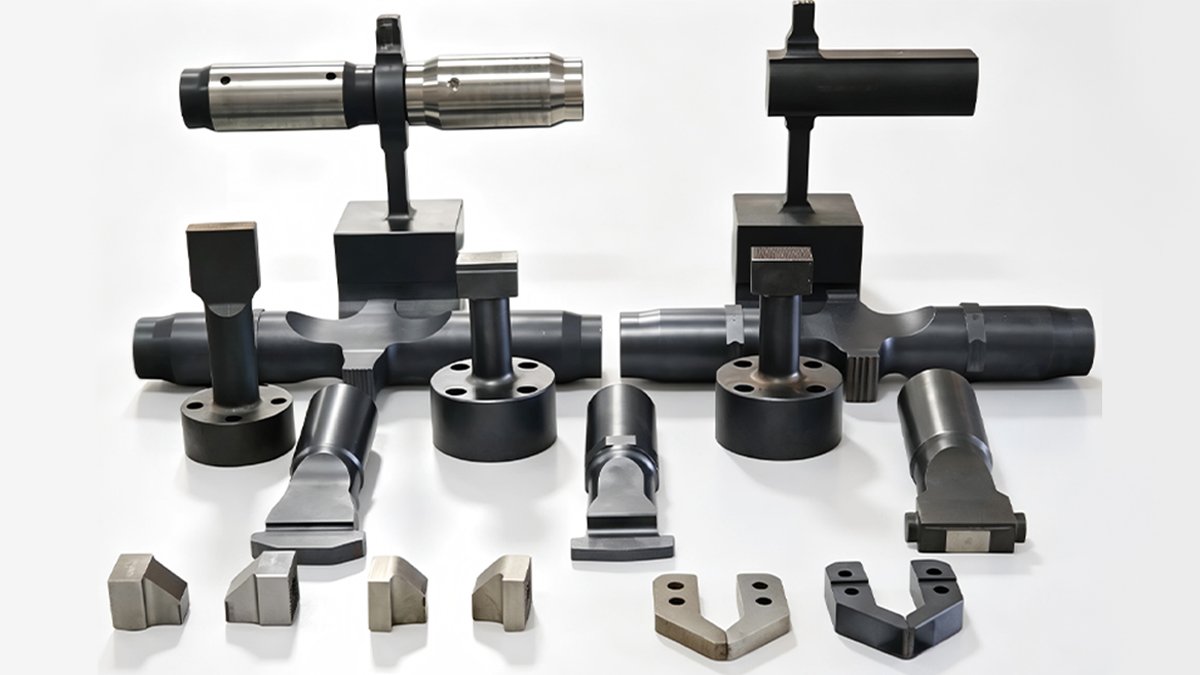
Periodically disassemble the stack (Transducer-Booster-Horn). Clean the mating surfaces using a lint-free cloth and isopropyl alcohol. Inspect for any micro-scratching or oxidation. When reassembling, always use a calibrated torque wrench to tighten the connecting studs to manufacturer-specified values.
Step 3: Run a Frequency Scan (Load vs. No-Load)
Utilize the digital generator’s built-in diagnosis tool to run a frequent resonance sweep. Compare the impedance values under no-load conditions. A sudden jump in nominal impedance indicates internal ceramic micro-fractures.
4. The OEM Advantage: How We Engineer Thermal Stability
As an original equipment manufacturer (OEM) specializing exclusively in industrial ultrasonic metal welding, we address thermal management at the foundational design level rather than relying solely on end-user maintenance:
- Premium Piezoelectric Ceramics: We source high-Q factor, low-loss material stacks that exhibit exceptional thermal stability under continuous heavy loads.
- Precision Machined Housing: Our custom-engineered transducer enclosures are optimized for airflow fluid dynamics, ensuring maximum cooling efficiency directly over the ceramic nodes.
- Smart Digital Generators: Our advanced control systems feature real-time automatic frequency tracking and dynamic impedance compensation, preventing the system from running out of harmony and generating excess heat.
Conclusion
Preventative care of your ultrasonic transducer ensures long-term operational accuracy and safeguards your automotive client deliverables against structural failures. If your line is currently dealing with inconsistent wire splice quality or frequent overheating alarms, it may be time to evaluate your tooling stack or update your technical equipment.
Need technical assistance or custom horn designs for your wire harness assembly lines? Contact our engineering team today for specialized consulting and factory-direct solutions.