Skip to content
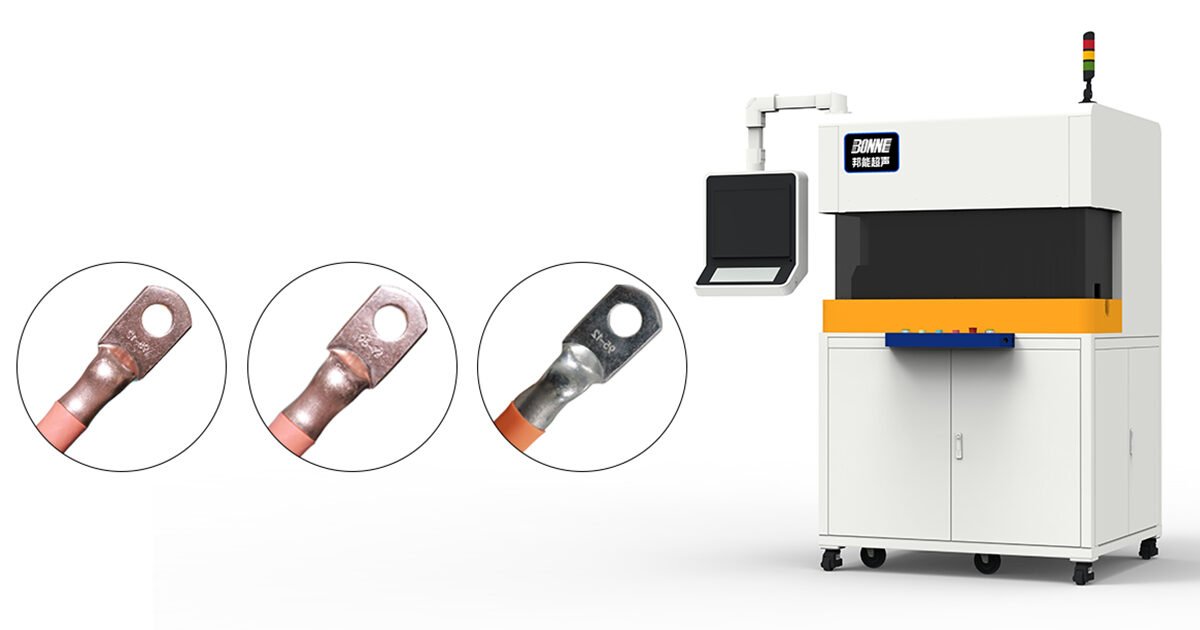
As electric vehicles (EVs) continue to evolve, automotive manufacturers are under increasing pressure to reduce vehicle weight, improve electrical performance, and maintain long-term connection reliability.
One of the biggest challenges is the connection of high-voltage aluminum and copper cables.
Traditional mechanical crimping, resistance welding, and other joining methods can become increasingly difficult when manufacturers need to connect large cross-section conductors, dissimilar metals, and high-voltage cable assemblies while maintaining consistent electrical and mechanical performance.
Electromagnetic Pulse Crimping (EMPC) provides an alternative approach.
By using a high-energy electromagnetic pulse to generate controlled deformation and pressure, EMPC can create reliable connections between conductive components without relying on conventional thermal welding.
For EV high-voltage harnesses, battery systems, power distribution units, and other high-current applications, this technology is attracting increasing attention from automotive engineers and manufacturing teams.
What Is Electromagnetic Pulse Crimping?
Electromagnetic Pulse Crimping is a high-speed joining process that uses electromagnetic force to deform a conductive sleeve, terminal, or workpiece around another component.
Unlike conventional crimping, where mechanical tooling applies force relatively slowly, EMPC generates a very rapid forming force through an electromagnetic pulse.
The process can be summarized as:
Electrical energy → Electromagnetic pulse → High-speed deformation → Mechanical interlocking → Reliable electrical connection
The extremely short process time allows the workpieces to undergo controlled plastic deformation while maintaining the overall integrity of the connected components.
Because the joining process does not depend on melting the base materials, EMPC is particularly interesting for applications involving aluminum, copper, and dissimilar-metal connections.
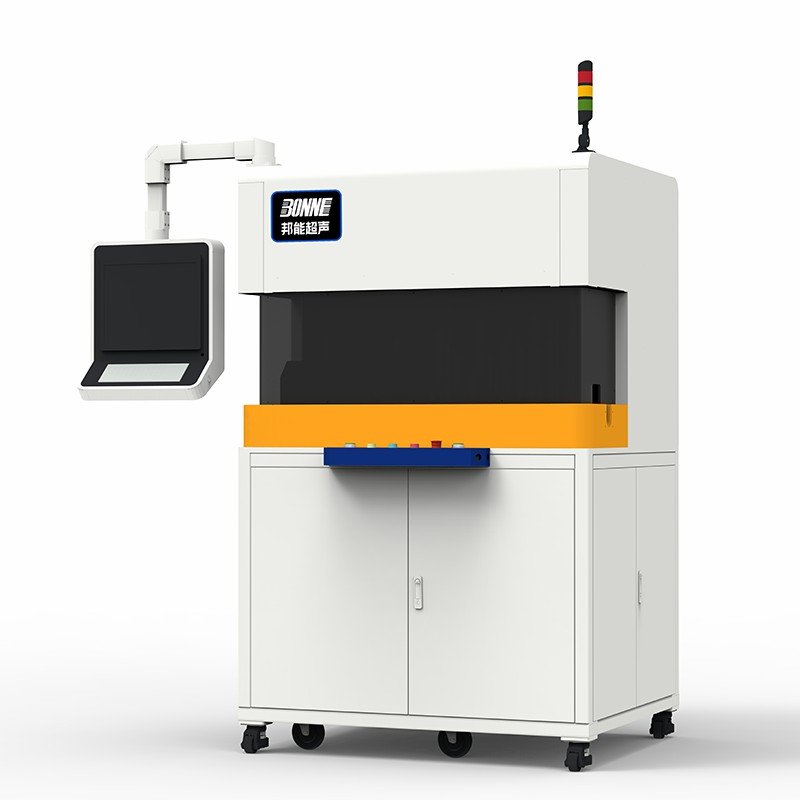
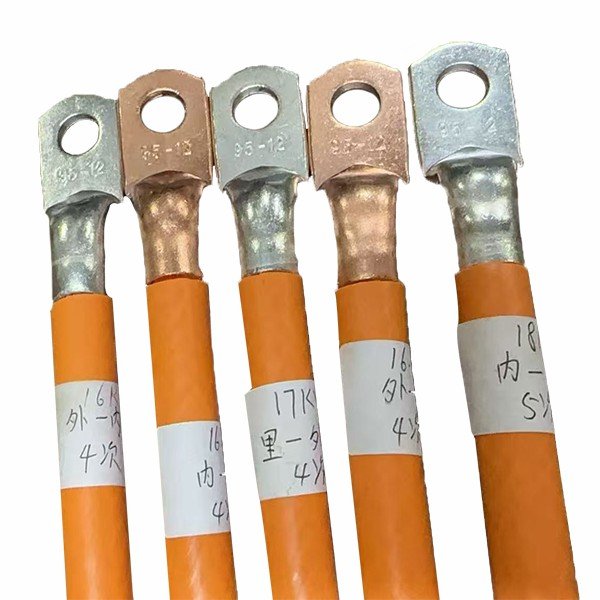
BONNE Electromagnetic Pulse Crimping Machine for High-Voltage EV Cable Connections
Why Are Aluminum and Copper Connections Challenging in EV Applications?
Aluminum and copper are both widely used in electric vehicles, but they have very different physical and electrochemical characteristics.
Copper provides excellent electrical conductivity and is commonly used in terminals, busbars, connectors, and electrical conductors.
Aluminum offers a significantly lower density and can help reduce the weight of high-voltage cable assemblies.
This creates a strong engineering incentive to combine the two materials.
However, joining aluminum and copper presents several challenges.
1. Different Material Properties
Copper and aluminum have different:
- Electrical conductivity
- Mechanical strength
- Thermal expansion coefficients
- Hardness
- Melting temperatures
- Surface characteristics
A joining process must accommodate these differences without creating excessive heat or damaging the components.
2. Aluminum Oxide Layer
Aluminum naturally forms an oxide layer on its surface.
This oxide layer is electrically resistive and mechanically different from the underlying aluminum.
For electrical connections, controlling the interface between aluminum and copper is therefore critical.
3. Galvanic Corrosion
Direct contact between copper and aluminum can create galvanic corrosion under unfavorable environmental conditions.
For this reason, EV manufacturers need to consider not only the initial connection quality but also long-term durability, environmental protection, and the complete joint design.
4. High Current Requirements
High-voltage EV cables may carry substantial electrical current.
A poor connection can result in increased electrical resistance, localized heating, energy loss, and potentially reduced system reliability.
For automotive applications, connection consistency is therefore just as important as connection strength.
How Does EMPC Work?
The exact process configuration depends on the component design and tooling, but the basic principle is straightforward.
A workpiece is positioned inside a specially designed electromagnetic forming system.
When the system releases a controlled electrical pulse, a strong electromagnetic field is generated.
This creates a rapid electromagnetic force that causes the conductive workpiece or sleeve to deform around the target component.
The result is a mechanically formed connection with intimate contact between the joining surfaces.
A simplified process is:
Step 1: Component Positioning
The aluminum cable, copper conductor, terminal, sleeve, or other components are positioned according to the required joint geometry.
Step 2: Tooling Alignment
The workpiece is placed inside the appropriate forming area.
Tooling geometry is critical because it determines how the material will deform during the pulse.
Step 3: Electromagnetic Pulse
The system releases a controlled electrical pulse through the electromagnetic actuator.
The resulting electromagnetic force produces extremely rapid deformation.
Step 4: Material Deformation
The conductive material is plastically deformed and pressed into the required geometry.
This can improve mechanical contact and electrical contact between the components.
Step 5: Quality Verification
Depending on the application, manufacturers can evaluate:
- Pull-out force
- Electrical resistance
- Cross-section
- Dimensional consistency
- Visual appearance
- Environmental durability
- Process repeatability
For automotive production, the joining process should ultimately be validated against the customer’s specific engineering and quality requirements.
What Makes EMPC Different From Conventional Crimping?
Conventional crimping is a proven technology and remains highly effective for many cable and terminal applications.
However, large-section conductors and dissimilar-metal connections can create additional process requirements.
EMPC changes the way the forming force is generated.
| Feature | Conventional Crimping | EMPC |
|---|---|---|
| Force generation | Mechanical | Electromagnetic |
| Process speed | Relatively slow | Extremely fast |
| Heat generation | Low | Very low compared with thermal joining |
| Material deformation | Mechanical compression | High-speed electromagnetic forming |
| Aluminum/Copper applications | Application-dependent | Particularly attractive |
| Large conductor applications | Tooling-dependent | Suitable for selected high-current applications |
| Process automation | Available | Available |
| Thermal damage | Generally low | No melting-based joining process |
| Joint validation | Pull force, resistance, etc. | Pull force, resistance, cross-section, etc. |
The key point is that EMPC is not simply a faster mechanical crimping machine.
It is a different method of generating forming force and can provide a different process window for demanding conductive connections.
EMPC vs. Resistance Welding
Resistance welding uses electrical current and contact resistance to generate heat.
The materials are locally heated to form a welded joint.
EMPC takes a fundamentally different approach.
It uses electromagnetic force rather than relying on resistance heating to melt or fuse the materials.
| EMPC | Resistance Welding | |
|---|---|---|
| Primary mechanism | Electromagnetic deformation | Resistance heating |
| Melting required | No | Usually yes, depending on process |
| Heat-affected zone | Minimal | Present |
| Dissimilar metals | Strong potential | Application-dependent |
| Process time | Very short | Short |
| Surface condition sensitivity | Application-dependent | Can be significant |
| Large conductive components | Potentially suitable | Highly application-dependent |
For high-voltage EV applications, the choice should be based on the actual cable size, terminal design, materials, required pull force, electrical resistance, production volume, and validation requirements.
EMPC vs. Ultrasonic Metal Welding
Ultrasonic metal welding is another important solid-state joining technology.
At BONNE Ultrasonics, we manufacture both ultrasonic metal welding equipment and electromagnetic pulse crimping equipment, allowing customers to evaluate different joining technologies according to their application.
Ultrasonic welding uses high-frequency mechanical vibration combined with pressure to create a solid-state bond.
EMPC, in contrast, relies on electromagnetic deformation.
The two technologies therefore have different application strengths.
Ultrasonic Metal Welding
Ultrasonic welding is widely used for:
- Multi-strand copper wire
- Aluminum wire
- Wire harnesses
- Battery tabs
- Busbars
- Cable splicing
- Copper-to-copper connections
- Aluminum-to-aluminum connections
- Selected dissimilar-metal applications
Electromagnetic Pulse Crimping
EMPC is particularly interesting for:
- Large cross-section EV cables
- High-voltage cable assemblies
- Aluminum and copper conductors
- Copper-aluminum connections
- Heavy-duty automotive terminals
- Battery pack connections
- Power distribution systems
- Selected high-current electrical joints
The correct technology depends on the joint geometry and application rather than simply the material name.
Where Is EMPC Used in EV Manufacturing?
EMPC has potential applications throughout the EV electrical architecture.
High-Voltage Wire Harnesses
Modern EVs use high-voltage cable assemblies to connect major electrical components.
Typical systems include:
- Battery packs
- Inverters
- Motors
- DC/DC converters
- On-board chargers
- Power distribution units
- High-voltage junction boxes
For large conductors, manufacturers need connections that combine mechanical strength with stable electrical performance.
EV Battery Systems
Battery packs contain numerous electrical connections where reliability is critical.
Potential EMPC applications include connections involving:
- Battery busbars
- High-current terminals
- Aluminum conductors
- Copper conductors
- Copper-aluminum interfaces
- High-voltage battery cables
Power Distribution Units
Power distribution units must handle high electrical loads while maintaining reliable connections over the vehicle’s operating life.
EMPC can be considered for selected terminal and conductor joining applications where conventional processes present limitations.
Inverter and Motor Connections
High-current connections between the battery, inverter, and electric motor require low electrical resistance and strong mechanical integrity.
For these applications, connection quality directly affects the overall reliability of the electrical system.
Why Are EV Manufacturers Interested in Aluminum?
Vehicle weight is a major consideration in EV engineering.
Aluminum has a lower density than copper, making it attractive for reducing the weight of high-voltage cable assemblies.
However, replacing copper with aluminum is not simply a material substitution.
Manufacturers must consider:
- Cable cross-section
- Current-carrying capacity
- Terminal design
- Contact resistance
- Corrosion protection
- Mechanical strength
- Connection technology
- Long-term reliability
This is why reliable aluminum joining technology is becoming increasingly important as EV platforms evolve.
Key Advantages of Electromagnetic Pulse Crimping
Depending on the application and joint design, EMPC can offer several potential advantages.
1. Solid-State Joining Approach
EMPC does not depend on melting the materials together.
This can reduce concerns associated with conventional thermal joining processes.
2. Extremely Fast Process
The electromagnetic forming event occurs within a very short time.
This makes EMPC attractive for automated high-volume manufacturing environments where cycle time is important.
3. Suitable for Dissimilar Conductive Materials
The technology is particularly interesting for aluminum-copper connections, where conventional joining methods may require additional process controls.
4. Low Thermal Influence
Because the joining mechanism is based on electromagnetic deformation rather than resistance heating, the process can minimize thermal exposure to the surrounding components.
5. Consistent Process Control
Modern EMPC systems can integrate controlled energy input, tooling, monitoring, and production parameters.
This allows manufacturers to develop repeatable joining processes suitable for automated production.
6. Potential for High Mechanical Strength
When the joint geometry and process parameters are properly engineered, electromagnetic deformation can create strong mechanical interlocking between the components.
However, actual joint strength must always be verified through application-specific testing.
What Should You Consider When Purchasing an EMPC Machine?
For automotive manufacturers, purchasing an electromagnetic pulse crimping system should not be based solely on the machine’s nominal power.
A better evaluation should consider the complete application.
1. Cable Cross-Section
Define the actual conductor range that needs to be processed.
For example:
- Minimum cable cross-section
- Maximum cable cross-section
- Single conductor or multi-strand conductor
- Solid conductor or stranded conductor
2. Material Combination
Specify the exact material combination.
For example:
- Copper + copper
- Aluminum + aluminum
- Copper + aluminum
- Aluminum cable + copper terminal
3. Joint Geometry
The terminal and cable geometry directly affects tooling design and forming behavior.
Provide the machine supplier with drawings or samples whenever possible.
4. Required Mechanical Strength
Pull-out force is one of the most important validation parameters.
The target value should be defined according to the customer’s engineering specification and applicable industry requirements.
5. Electrical Resistance
A mechanically strong connection is not necessarily a good electrical connection.
Initial contact resistance and resistance stability after environmental testing should be evaluated.
6. Tooling Life
For mass production, tooling durability directly affects production cost and machine availability.
Ask the supplier about:
- Tool material
- Tool life
- Replacement cost
- Tool change procedure
- Application-specific tooling development
7. Process Monitoring
For automotive production, process traceability can be highly valuable.
Depending on the machine configuration, manufacturers may want to monitor parameters such as:
- Pulse energy
- Process time
- Forming parameters
- Process status
- Production count
- Fault information
8. Sample Testing Before Purchase
This is one of the most important steps.
Instead of selecting a machine purely from a specification sheet, send the actual cable and terminal samples to the equipment manufacturer.
A professional supplier should be able to help evaluate:
Material → Joint design → Tooling → Process parameters → Pull force → Electrical resistance → Cross-section
This provides much more useful information than comparing machine power alone.
Why Application Testing Matters
There is no universal EMPC parameter that works for every aluminum-copper connection.
The optimal process depends on:
- Material
- Cable diameter
- Cross-section
- Terminal geometry
- Material hardness
- Surface condition
- Joint structure
- Required mechanical strength
- Electrical requirements
- Production cycle time
For this reason, a machine supplier should evaluate the actual customer application before recommending the final system.
At BONNE Ultrasonics, application evaluation can include sample testing and joint validation to help customers determine whether electromagnetic pulse crimping is suitable for their specific application.
EMPC for the Future of EV High-Voltage Connections
The transition toward electrification is changing the requirements for automotive joining technology.
As EV platforms use more high-voltage systems, manufacturers increasingly need joining processes that can handle:
- Larger cable cross-sections
- Lightweight aluminum conductors
- Copper-aluminum interfaces
- High-current applications
- Automated production
- Consistent process quality
- Traceable manufacturing parameters
Electromagnetic Pulse Crimping provides a different approach to conductive joining by combining extremely fast electromagnetic deformation with controlled forming.
It is not intended to replace every conventional crimping or welding process.
Instead, EMPC should be evaluated as an additional joining technology for applications where conventional processes may have limitations.
EMPC or Ultrasonic Welding: Which One Should You Choose?
The answer depends on your application.
If you are joining multi-strand wires, wire harnesses, battery tabs, busbars, or smaller conductive components, ultrasonic metal welding may be an excellent solution.
If you are working with large-section high-voltage cables, aluminum-copper connections, or heavy automotive electrical connections, electromagnetic pulse crimping may be worth evaluating.
In some production environments, the two technologies can even complement each other.
The most reliable way to make the decision is not to compare technologies in isolation, but to compare their performance on your actual materials and joint design.
Conclusion
As EV manufacturers move toward lighter vehicles, higher voltage systems, and higher electrical loads, reliable aluminum and copper joining is becoming increasingly important.
Electromagnetic Pulse Crimping (EMPC) offers a high-speed, solid-state approach for forming conductive connections and is particularly promising for selected high-voltage EV applications involving large conductors and dissimilar metals.
However, the right joining technology depends on the complete application.
Before purchasing an EMPC machine, manufacturers should evaluate the actual cable materials, cross-section, terminal design, mechanical requirements, electrical resistance, tooling, cycle time, and validation results.
The best machine is not necessarily the one with the highest power. It is the one that can reliably produce the required joint on your actual production materials.
Looking for an EMPC Solution for Your EV Cable Application?
BONNE Ultrasonics is a manufacturer of ultrasonic metal welding machines and electromagnetic pulse crimping equipment for automotive, EV, battery, and electrical connection applications.
If you are developing a new aluminum-copper connection, high-voltage EV cable, battery connection, or automotive terminal, send us your cable and terminal specifications.
Our engineering team can evaluate your application and recommend a suitable joining process and tooling solution.
Learn More About Our Electromagnetic Pulse Crimping Machine ⬅️
Contact BONNE Ultrasonics for an application evaluation or sample test.
Website: bonnesonic.com
Email: chen@bnsonic.com