Skip to content
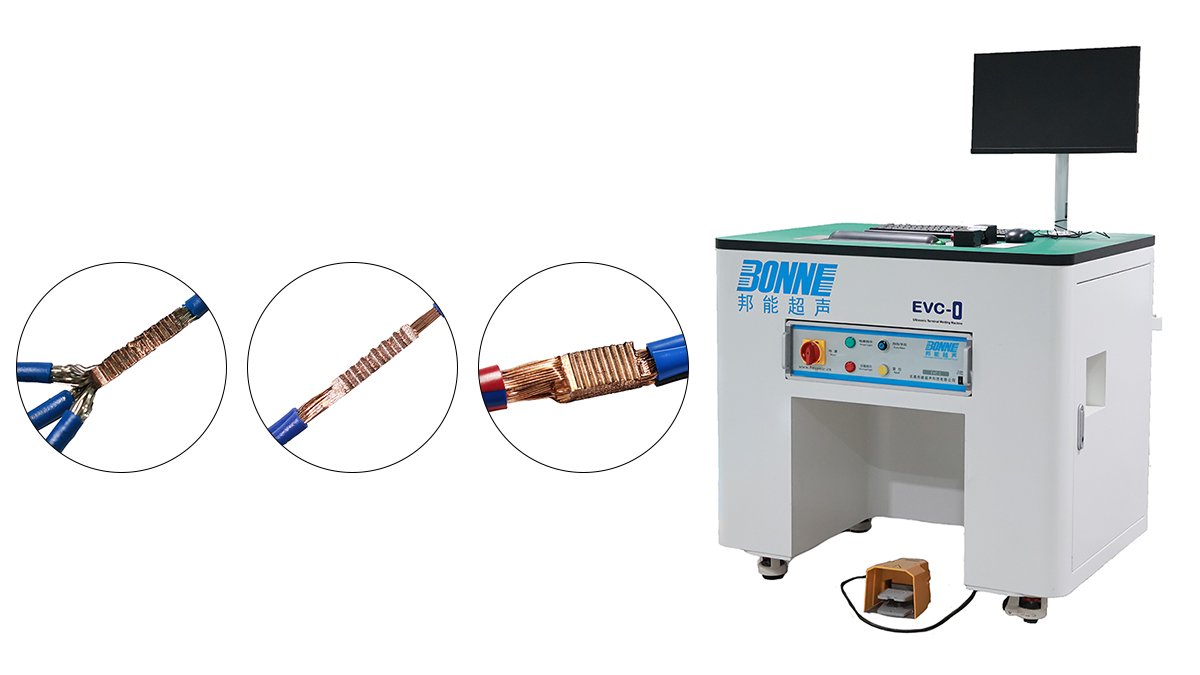
In the rapidly evolving Electric Vehicle (EV) and Hybrid Electric Vehicle (HEV) markets, high-voltage (HV) wire harnesses serve as the critical neural network, delivering continuous high currents between battery packs, power inverters, junction boxes, and electric motors.
Unlike traditional 12V low-voltage systems, HV systems demand far higher standards for electrical conductivity, thermal endurance, and vibration stability. To meet these stringent automotive requirements, Ultrasonic Metal Welding (UMW) has emerged as the global industry standard for Tier-1 automotive suppliers.
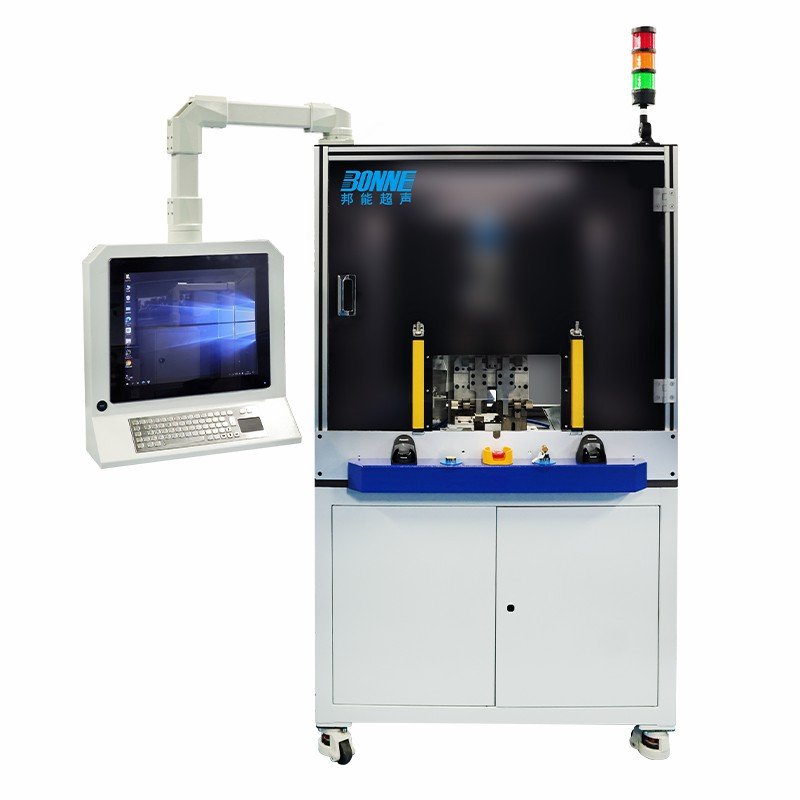
At Bonne Ultrasonic, we engineer heavy-duty ultrasonic metal welding systems designed specifically to tackle the extreme manufacturing demands of high-voltage automotive wire harness assemblies.
1. The Engineering Challenge of HV Wire Harness Assembly
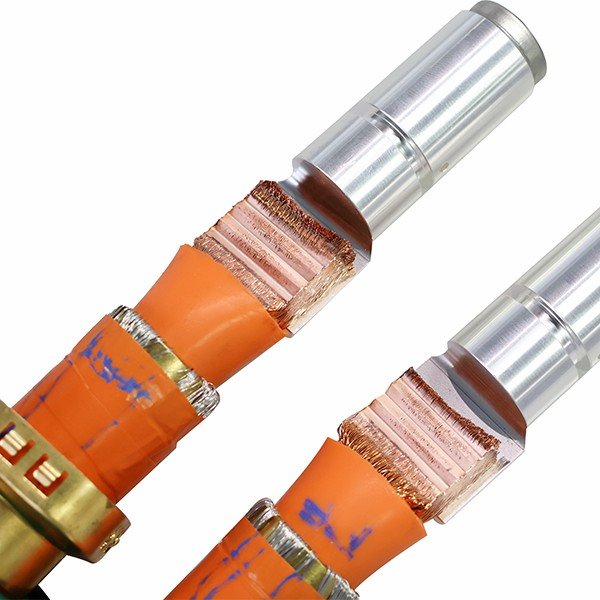
High-voltage automotive systems typically utilize aluminum or copper cables with large cross-sections ranging from 16 mm² to 120 mm² or higher. Joining these large-diameter stranded cables to heavy-duty terminals, busbars, or creating direct splices presents severe manufacturing hurdles:
- Thermal Degradation & Hotspots: Traditional crimping can result in high contact resistance over extended duty cycles, leading to localized thermal runaway under high-current loads.
- Vibration-Induced Failure: Automotive environments undergo continuous shock and vibration. Mechanical crimps are prone to micro-movement, oxidation, and loss of conductivity over time.
- Material Compatibility (Cu to Al): The industry shift toward aluminum conductors to reduce vehicle weight introduces rapid surface oxidation, complicating reliable bonds between aluminum wires and copper terminals or busbars.
2. How Bonne Ultrasonic Welding Technology Solves the Challenge
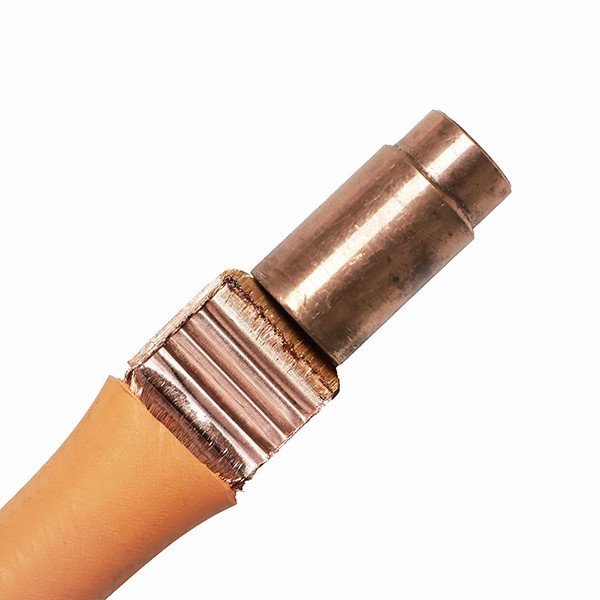
Ultrasonic metal welding is a solid-state bonding process. By applying high-frequency mechanical vibrations (20 kHz) under precision pneumatic pressure, surface oxide layers on individual wire strands are broken down and dispersed. This creates a homogeneous, atomic-level metallurgical bond without melting the base metals.
Key Technical Advantages of Bonne Ultrasonic Welders
- Ultra-Low Electrical Resistance: Base metals remain well below their melting temperatures, preventing the formation of brittle intermetallic compounds, voids, or oxide inclusions. The resulting joint maintains electrical resistance near that of the raw conductor material.
- USCAR-38 Compliant Mechanical Strength: Bonne’s high-amplitude acoustic systems produce solid weld nodes that pass rigorous vibration, tensile pull, and thermal shock testing according to USCAR-38 and SAE automotive standards.
- Seamless Dissimilar Metal Joining (Cu/Al): Our process easily joins copper wires to aluminum terminals or copper busbars without thermal distortion or expensive shielding gases.
- Lower Total Cost of Ownership (TCO): Eliminates costly consumables like crimp sleeves, flux, or silver-plated terminals, while dramatically cutting energy usage compared to laser or resistance welding.
3. Comparative Technical Analysis
| Process Parameter | Bonne Ultrasonic Welding | Mechanical Crimping | Laser Welding |
| Bonding Mechanism | Solid-state atomic diffusion | Mechanical interlocking | Fusion / Liquid melting |
| Electrical Resistance | Near parent metal (Minimal) | Moderate to High (Degrades) | Moderate (Potential voids) |
| Thermal Strain | Low (< 35% melting temp) | None | High (Risk to insulation) |
| Bi-Metallic Joining (Cu/Al) | Excellent (No intermetallics) | Poor (Galvanic corrosion risk) | Extremely difficult |
| Quality Control | 100% Real-time SPC tracking | Destructive pull-test only | High-cost optical vision |
| Consumable Cost | Low (Durable Sonotrode/Anvil) | High (Crimp terminals/sleeves) | High (Laser optics/gas) |
4. Why Tier-1 Manufacturers Choose Bonne Ultrasonic Equipment
Engineered for continuous industrial production, Bonne Ultrasonic equipment provides the precise parameter control and durability required for Tier-1 automotive lines:
- Broad Cable Cross-Section Range (Up to 120 mm²): High-power generators and customized horns deliver consistent acoustic energy across large-diameter wire splices and terminal attachments.
- 100% Real-Time SPC Quality Control: Integrated digital controllers monitor key parameters for every single weld—including weld height, collapse distance, energy consumption, and peak power—ensuring complete IATF 16949 traceability.
- Quick-Change Tooling Design: High-wear sonotrodes and anvils feature ergonomic quick-replacement mechanisms, minimizing changeover downtime across diverse harness configurations.
- Automation & Robotic Readiness: Compact actuator design allows seamless integration into fully automated stripping, positioning, and robotic harness assembly cells.
Partner with Bonne Ultrasonic for Your EV Harness Production
As global OEMs transition toward 800V EV architectures and ultra-fast charging systems, connection reliability cannot be compromised. Bonne Ultrasonic offers comprehensive technical support, sample testing, and custom tooling design to optimize your high-voltage harness manufacturing.
Contact our engineering team today to request a feasibility report or send sample wires for complimentary laboratory weld testing.