Skip to content
Ultrasonic Metal Welding Machine for Advanced Electrical Connection Systems
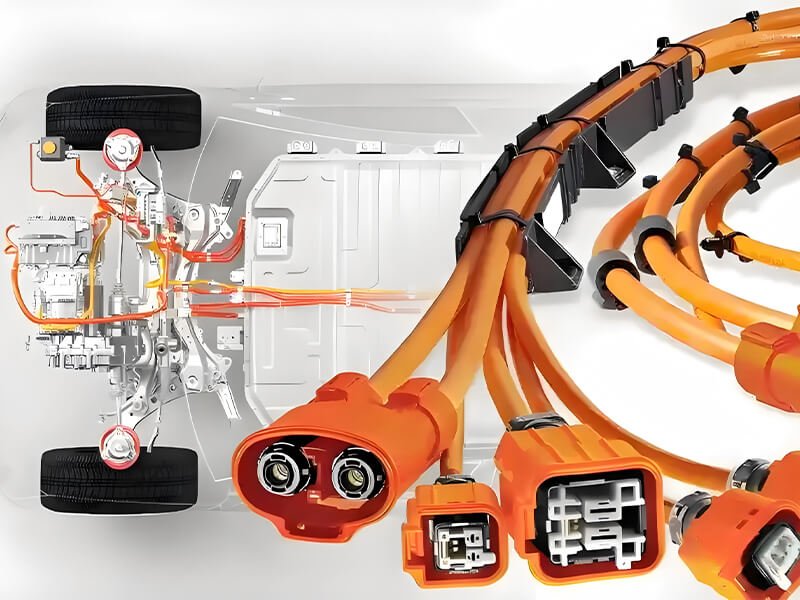
Automotive – High Voltage Wire Harness
Ultrasonic Metal welding is widely applied in high-voltage wire harness systems for electric and hybrid vehicles. It enables the connection of copper conductors with extremely low electrical resistance and high mechanical strength, ensuring safe and stable power transmission under high current loads.
Compared with traditional crimping or soldering methods, ultrasonic welding eliminates additional materials, reduces contact resistance, and significantly improves vibration resistance and long-term reliability. It is widely used in EV battery packs, power distribution units, and motor control systems where safety and performance are critical.
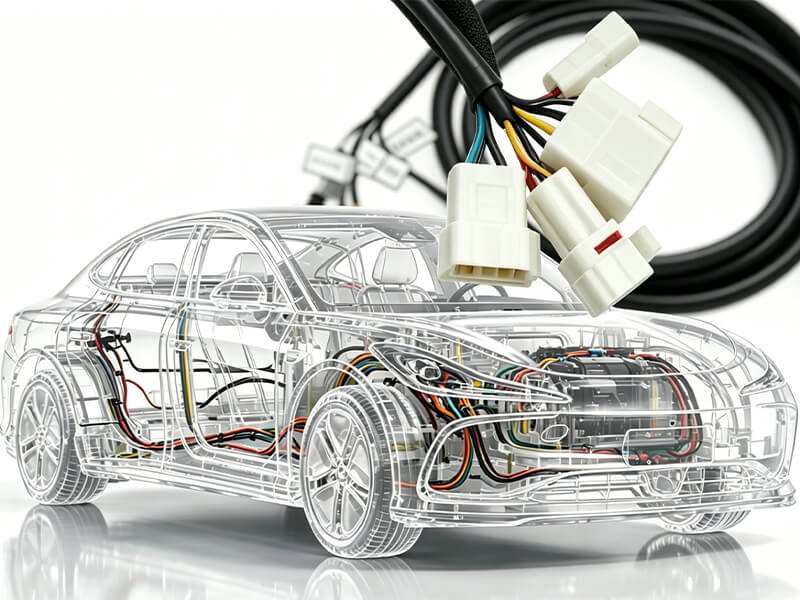
Automotive – Low Voltage Wire Harness
For low-voltage wire harness applications in automotive systems, Ultrasonic Metal weldingg provides a highly efficient and consistent connection method for signal and power transmission. It replaces conventional crimping and soldering processes, delivering stable electrical performance, strong bonding strength, and improved production efficiency.
This technology is widely used in body control modules, lighting systems, dashboard electronics, and other vehicle electrical subsystems, where mass production consistency and cost control are essential.
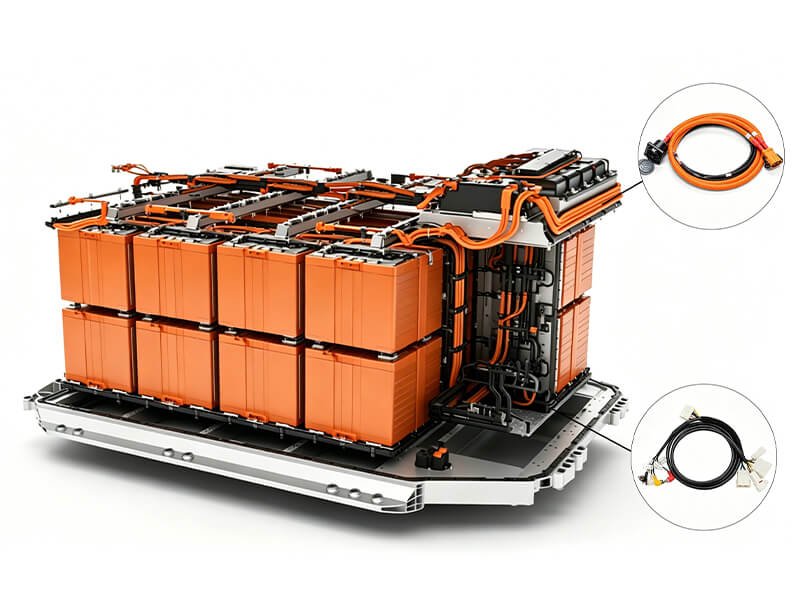
Energy Storage Battery
Ultrasonic Metal welding plays a key role in energy storage battery systems, especially in battery module interconnections and busbar connections. It ensures ultra-low resistance joints with excellent current-carrying capability, which is essential for maintaining system efficiency and safety in high-power applications.
By eliminating solder and mechanical fasteners, ultrasonic welding improves thermal stability, reduces energy loss, and enhances the durability of battery packs under continuous charge and discharge cycles. It is widely used in lithium battery packs, energy storage cabinets, and renewable energy systems.
Communication Cables
In communication cable manufacturing, Ultrasonic Metal welding is used to achieve high-quality electrical connections while maintaining signal integrity and shielding performance. It replaces traditional crimping and soldering methods, ensuring stable conductivity and low insertion loss in high-speed data transmission systems.
This technology is widely applied in Ethernet cables, RF cables, coaxial cables, and high-speed data lines used in telecommunications, industrial networking, and electronic devices. It ensures reliable performance even under high-frequency and electromagnetic interference environments.
Advantages of Ultrasonic Metal Welding Machine
Engineered for Process Stability
Reduce Costs Without Compromise
Durable & Easy to Maintain
Rapid Cycle Efficiency
User-Friendly & Secure
Automation potential
Zero-Prep Joining
Eco-Friendly Manufacturing
Wondering if our equipment is suitable for your project?
Send us your samples. We provide free welding tests and video reports to prove our machine’s capability.